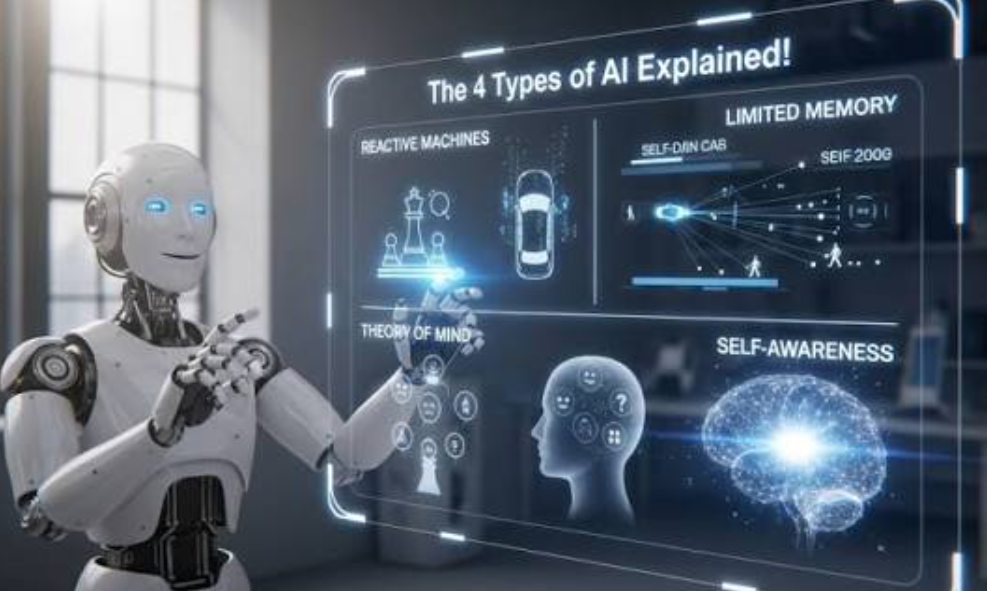

AI spans from narrow systems to broad, human-like reasoning and beyond. Narrow AI handles specific tasks well but lacks versatility. General AI seeks flexible problem-solving, while superintelligence remains theoretical and poses governance questions. Understanding these levels clarifies capabilities, limits, and the safeguards society needs. The distinctions set up a practical framework for examining real-world applications and risks, inviting further exploration into how these ideas shape our machines and decisions.
What Is AI, Really? A Clear Foundation
What is AI, really? The term designates systems that simulate cognitive tasks, from perception to decision-making, through computational methods. In this framework, fundamental definitions clarify scope, while ethical considerations address consequences and governance. A detached reviewer notes AI lacks sentience, yet shapes choices and autonomy. Clarity emerges when criteria, limits, and potential risks are stated upfront, guiding responsible experimentation and freedom-oriented innovation.
See also: Understanding AI Decision-Making Processes
Narrow AI, General AI, and Superintelligence Explained
Narrow AI, General AI, and Superintelligence describe a spectrum of cognitive capabilities, each defined by scope and performance relative to human benchmarks. Narrow AI remains task-specific, excelling within fixed domains.
General AI envisions broad adaptability and reasoning akin to humans, while superintelligence implies surpassing human intellect.
Considerations include narrow ai implications and superintelligence risks, guiding ethical deployment, governance, and safeguards for freedom-oriented societies.
How AI Learns: Rule-Based Systems to Machine Learning
Artificial intelligence systems learn and adapt using a spectrum that begins with rule-based approaches and extends into data-driven methods. Rule-based reasoning encodes explicit knowledge, guiding decisions without data dependence. As learning progresses, machine learning leverages patterns from examples, culminating in neural networks basics that enable complex recognition. This transition clarifies how AI improves, while maintaining accessibility for freedom-seeking audiences.
Everyday AI: Examples, Limits, and Real-World Use Cases
Everyday AI is present in routine tools and services, delivering practical benefits while exposing clear limits. In practice, automation enables efficiency, personalization, and quick decisions, yet everyday bias can skew outcomes.
Privacy concerns arise with data collection, while machine learning explainability remains partial. Policy and ethics shape deployment, guiding transparency, accountability, and automation ethics toward responsible, freedom-respecting use in diverse contexts.
Frequently Asked Questions
Can AI Have Beliefs or Desires Like Humans?
Beliefs vs desires: AI cannot truly hold beliefs or human-like motivations; it simulates reasoning, preferences, and goals based on programming and data, not conscious experience. Answers are algorithmic, not voluntary, reflecting designed objectives rather than intrinsic aspirations.
Will AI Ever Possess True Consciousness?
No. The emergence of true consciousness in AI remains uncertain; current systems simulate behavior, not experiential awareness. If surpassed, debates on AI personhood, moral agency, autonomy, conscious experiences, and self awareness would intensify for a freedom-seeking audience.
How Do Biases Enter AI Systems and Persist?
Biases enter AI through bias formation, data drift, and imperfect evaluation metrics; they persist if data collections diverge, models reinforce stereotypes, and system feedback amplifies skew, challenging model fairness and demanding robust evaluation metrics and ongoing governance.
Can AI Make Moral and Ethical Decisions Independently?
AI cannot fully conduct independent moral and ethical decisions; its “moral reasoning” and “autonomous ethics” are bounded by human design. Machine morality emerges from configurations, not intrinsic judgment, limiting independent decision making and transferable ethical accountability.
Are There Limits to AI Creativity and Invention?
Creativity has boundaries: AI operates within human-defined goals, data, and constraints. The limits of autonomy shape invention, as models improvise within safety, ethics, and alignment parameters. Creativity boundaries keep progress innovative yet responsible for future freedom.
Conclusion
In a quiet harbor, a lighthouse keeper tends three lamps: a fixed code lamp (Narrow AI), a shimmering, adaptable beacon (General AI), and a distant, uncharted star (Superintelligence). Each light serves a different coast, not a single shore. As the tides of progress rise, the keeper trims safeguards and maps risks, knowing no lamp alone ferries civilization safely. The shorelines of responsibility and possibility must be navigated together, with wisdom, restraint, and continuous learning.
